
A hernia is one of the most common surgical conditions, yet many people ignore its early signs until it begins affecting their daily routine. What may start as a small lump or occasional discomfort can gradually become more painful and, in some cases, lead to serious complications. Understanding the symptoms, different types of hernias, and when surgery is recommended can help you seek treatment before the condition worsens.
Many people in Vashi, Koparkhairne, CBD Belapur, Panvel, Mankhurd, and across Navi Mumbai initially mistake a hernia for a simple muscle strain. However, a proper medical examination is essential because a hernia does not heal on its own and usually requires surgical repair.
What Is a Hernia?
A hernia develops when an internal organ or fatty tissue pushes through a weak area in the surrounding muscle or connective tissue. This creates a noticeable bulge that may become more visible while standing, coughing, lifting heavy objects, or straining.
Although hernias can occur in different parts of the body, abdominal hernias are the most frequently diagnosed.
Without treatment, the weakness in the abdominal wall usually becomes larger over time.
Common Types of Hernias
Several types of hernias require surgical evaluation.
Inguinal Hernia
This is the most common type and occurs in the groin. It is seen more frequently in men but can also affect women.
Umbilical Hernia
This develops near the belly button and may occur in both children and adults. In adults, obesity and pregnancy can increase the risk.
Incisional Hernia
An incisional hernia develops at the site of a previous abdominal surgery where the muscles have weakened.
Femoral Hernia
Less common than inguinal hernias, femoral hernias occur near the upper thigh and are more frequently seen in women.
Hiatal Hernia
Unlike other hernias, a hiatal hernia develops inside the body when part of the stomach moves through the diaphragm into the chest cavity. It often causes acid reflux and heartburn rather than a visible lump.
What Causes a Hernia?
A hernia develops when muscle weakness combines with increased pressure inside the abdomen.
Some common risk factors include:
- Heavy lifting without proper support
- Chronic coughing
- Obesity
- Constipation and frequent straining
- Pregnancy
- Previous abdominal surgery
- Age-related muscle weakness
- Family history of hernias
Even physically active individuals can develop a hernia if the abdominal wall becomes weakened.
Symptoms You Should Not Ignore
The symptoms vary depending on the type and size of the hernia.
Common signs include:
- A visible swelling or lump
- Pain while lifting heavy objects
- Discomfort during prolonged standing
- Burning or aching sensation near the bulge
- Pressure in the groin or abdomen
- Swelling that disappears when lying down
Certain symptoms require immediate medical attention, including:
- Sudden severe pain
- Persistent vomiting
- Redness over the swelling
- Fever
- A lump that cannot be pushed back inside
These may indicate a strangulated hernia, which is a surgical emergency.
Does Every Hernia Need Surgery?
Not every small hernia requires immediate surgery, but a hernia never repairs itself naturally.
Doctors may recommend observation for selected patients with very small, symptom-free hernias. However, surgery is generally advised when:
- Pain becomes frequent.
- The swelling increases in size.
- Daily activities become difficult.
- There is discomfort while walking or exercising.
- The hernia becomes trapped.
- There is a risk of complications.
Early surgical repair is often easier than waiting until the hernia becomes larger.
How Is Hernia Surgery Performed?
There are two main surgical approaches.
Open Hernia Repair
The surgeon makes an incision over the affected area, returns the tissue to its proper position, and strengthens the weakened muscle, often using a surgical mesh.
Laparoscopic Hernia Surgery
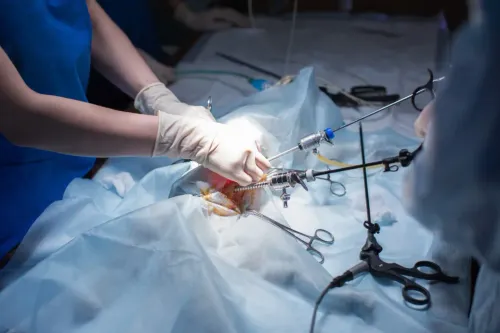
This minimally invasive technique uses small incisions, a camera, and specialized instruments to repair the hernia.
Many patients undergoing laparoscopic repair experience:
- Smaller scars
- Less postoperative discomfort
- Reduced hospital stay
- Faster recovery
- Earlier return to work
The most appropriate technique depends on the type of hernia, previous surgeries, and the patient's overall health.
Recovery After Hernia Surgery
Recovery varies according to the surgical method and the patient's physical condition.
Most surgeons advise patients to:
- Walk soon after surgery.
- Avoid lifting heavy weights for several weeks.
- Eat a balanced, fibre-rich diet.
- Prevent constipation.
- Keep the surgical wound clean.
- Attend follow-up appointments.
Most people gradually resume normal activities after receiving clearance from their surgeon.
Can a Hernia Be Prevented?
Although some hernias cannot be prevented, healthy habits may reduce the risk of developing one or prevent recurrence after surgery.
Helpful preventive measures include:
- Maintaining a healthy body weight
- Exercising to strengthen core muscles
- Using proper lifting techniques
- Treating chronic cough
- Avoiding smoking
- Preventing constipation through adequate fibre and water intake
These lifestyle measures also contribute to overall abdominal health.
Finding Experienced Hernia Care in Navi Mumbai
Choosing an experienced surgical team is important for accurate diagnosis and effective treatment. Patients from Vashi, CBD Belapur, Koparkhairne, Panvel, Mankhurd, and nearby areas often seek hospitals that provide modern surgical techniques along with comprehensive evaluation and personalised care.
Dr Girish Moharir Shree Hospital Vashi offers assessment and treatment for different types of hernias, including laparoscopic and open hernia repair when clinically appropriate. Every treatment plan is based on the patient's symptoms, medical history, and examination findings to ensure safe and effective care.
Ignoring a hernia can allow it to enlarge and increase the risk of complications. Seeking timely medical advice helps determine the most suitable treatment option and can lead to a smoother recovery with a quicker return to everyday life.
Keywords